

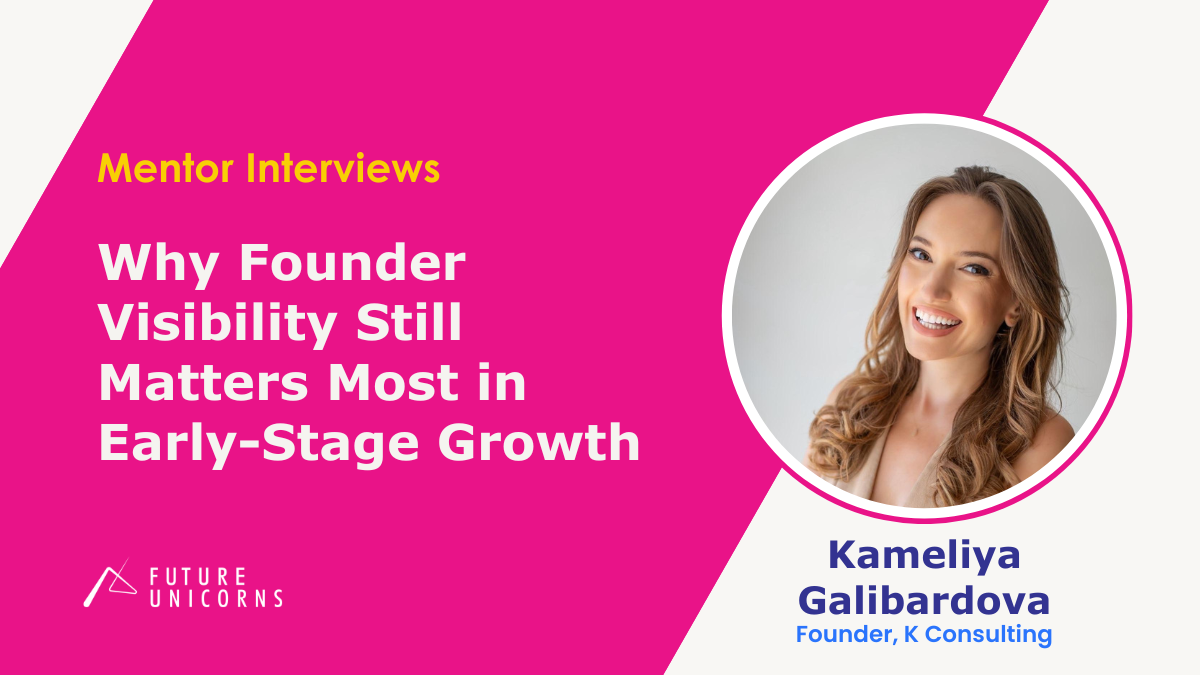
Kameliya Galibardova is a marketing strategist and startup advisor working across Europe, the UK, and the US, with a focus on helping early-stage companies build scalable go-to-market foundations. Her work combines positioning, founder-led personal branding, and email marketing automation, helping startups turn visibility, relationships, and market presence into repeatable growth systems. As a mentor within Future Unicorns, she works closely with founders on how to build trust, sharpen messaging, and create sustainable customer acquisition mechanisms while entering competitive international markets.
Working across Europe, the UK, and the US has taught me that early-stage marketing is ultimately about building trust and creating systems that turn visibility into revenue.
While channels and tactics vary across markets, the fundamentals remain the same: clear positioning, a compelling value proposition, and consistent relationship building.
One of the most important lessons I have learned is that a founder’s personal brand is often one of the most valuable growth assets a startup can have. In the early stages, people invest in people before they invest in products. A strong personal brand helps founders attract customers, investors, partners, and top talent.
At the same time, visibility alone is not enough. That is where email marketing automation and nurturing come in. I help founders build automated systems that capture leads, educate prospects, and maintain relationships over time, so that interest generated through personal branding and go-to-market efforts turns into qualified opportunities and long-term customers.
First, founders need to get their positioning and messaging right. If people do not immediately understand the problem you solve and why your solution is different, no marketing channel will perform effectively.
Second, I recommend focusing on founder-led personal branding combined with a simple email nurturing system.
Consistently sharing insights on LinkedIn builds authority and trust, while a lead magnet, landing page, and automated email sequence ensure that every new connection is nurtured systematically.
This combination is one of the most cost-effective ways for early-stage startups to generate awareness, build credibility, and convert relationships into customers.
The biggest mistake is assuming that entering a new market is simply a matter of increasing ad spend or outbound outreach.
In markets like the US, trust and credibility are critical. What works much better is adapting your positioning to the local audience, building a visible founder presence, and implementing nurturing systems that keep prospects engaged.
A strong personal brand opens doors and creates trust faster, while email automation ensures that potential customers, investors, and partners continue receiving relevant and valuable communication over time.
Together, these systems create momentum and significantly improve conversion rates.
Earlier in my career, I focused primarily on campaign execution and channel optimization.
Over time, I realized that the most sustainable growth comes from combining strategic positioning, founder-led personal branding, and automated nurturing systems.
Today, I prioritize three elements: clear messaging, authentic visibility, and scalable email automation. When founders consistently share their expertise and pair that visibility with well-designed email sequences, they build trust at scale and create a predictable pipeline of opportunities.
Good early traction is not just about website traffic or social media engagement. It is about evidence that trust is being built and that the market is responding.
For me, meaningful traction includes qualified conversations, inbound leads, repeat purchases, referrals, and growing engagement with both the company and the founder’s personal brand.
When prospects regularly engage with a founder’s content and then enter an automated nurturing sequence that leads to sales conversations, that is a strong signal that the startup has built a repeatable growth engine.
Founders often overestimate the importance of tactics and channels.
What they underestimate is the combined power of personal branding, consistent nurturing, and relationship building. A founder’s reputation can accelerate every part of the business, from customer acquisition to fundraising and partnerships.
In the early stages, people buy from people. Founders who invest in their personal brand and support it with email automation and nurturing systems create a competitive advantage that compounds over time.

